
The Book Refuses a Perfect Ending
I ChingThis flow traces the ending's contrast between a completed enterprise and a world that immediately reopens to uncertainty and change.
increasing Bearing strength in each event
 decreasing
Bearing strength in each eventdecreasingCompletion Is Achieved

A State Crosses the Stream
A successful passage
Completion represents the vessel of the state safely across a dangerous stream. Legge reads it as a condition in which disorder has been repressed and the new government has been established.
The opening carries an unmistakable sense of achievement.
Small work remains
The judgment warns that progress is secure only in small matters and that disorder may follow success. Completion begins with an invitation to consolidate rather than celebrate without limit.
The end of one task is already the beginning of another.
A Fox Pulls Back from the Water

Rest After Achievement
The wheel is held back
The first line pictures a driver pulling back a wheel and a fox with a wet tail. Legge says the subject should stop moving after the successful undertaking.
The first danger is the urge to cross again immediately.
The achievement must settle
Rest allows a new condition to take hold. The line's absence of error comes from recognizing that success has changed what action is appropriate.
Completion requires restraint before further enterprise.
A Great Campaign Takes Too Long

A Costly Success
An old conquest recalled
The third line recalls Wu Ding's campaign against the Demon Region, which lasted three years. Legge describes it as an enterprise that may have been successful but remained tedious.
Victory can still carry a heavy cost.
Do Not Entrust It to the Unfit
The line warns that small men should not be employed for such campaigns. A difficult success depends on the judgment and character of those chosen to lead it.
The remembered war complicates any triumphal account of completion.
A Small Offering Outweighs a Grand One
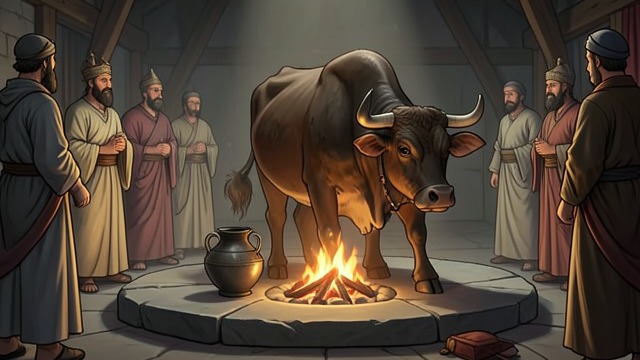
The Quality of the Settlement
Two forms of sacrifice
The eastern neighbor offers an ox, while the western neighbor offers a smaller spring sacrifice. The less elaborate offering receives the blessing because it is sincere.
Legge presents the contrast as evidence that material abundance is not the measure of right conduct.
Completion is ethical
A successful state must preserve the quality of its inner purpose. Ceremony and victory alike can become empty if they lose sincerity.
The line shows that completion is judged by what sustains it, not by its outward scale.
The Final Hexagram Reopens the Work
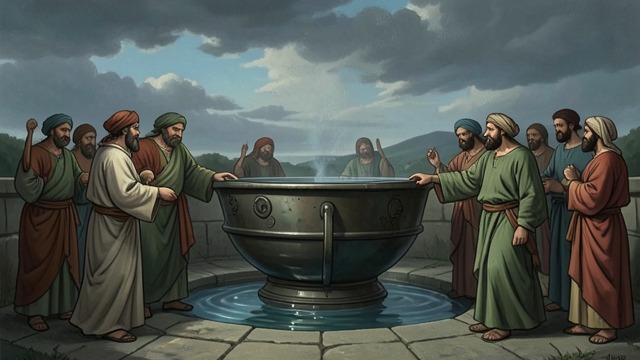
No Permanent Settlement
The next struggle begins
Not Yet Completed follows Completion with a vessel still uncrossed. Legge says the book could not have ended with a permanent picture of settled human affairs without contradicting its central concern with change.
Order has been achieved before, and it has ended before.
A recurring responsibility
The final fox warns against carelessness just when success seems near. Political work must be recommenced with renewed attention and restraint.
The book's ending is open: its last word is not final victory but the beginning of another effort.
At the opening of Completion
At the first line of Completion
At the third line of Completion
At the fifth line of Completion
At the final lines of Not Yet Completed
